Richmond Street Jewelry & Coins (Philadelphia): A Practical Fit Guide for Selling Coins, Gold, and Silver
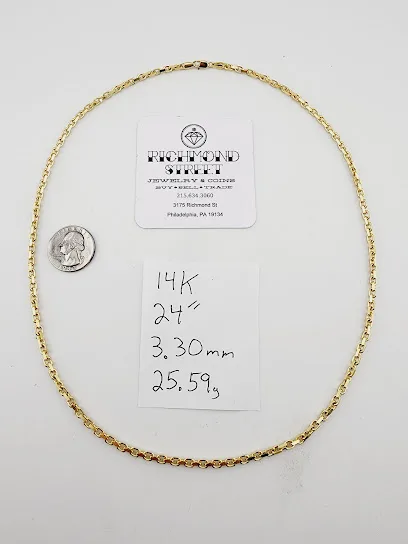
If you’re considering Richmond Street Jewelry & Coins, you’re probably trying to solve a specific problem: where to take a numismatic coin lot, bullion-style gold or silver, or mixed estate pieces without losing time (or clarity) in the buying conversation. Public listings for this Philadelphia shop point to a clear focus on coins plus gold and silver, so the smartest next step is to prepare your items and your questions in a way that supports verification.
Use the concrete signals below to anchor the conversation: 3175 Richmond St, Philadelphia, PA 19134, +1 215-634-3060, and an online presence via http://www.facebook.com/groups/richmondstreet. Treat these as the baseline facts you can confirm before you discuss authenticity, condition, or value.
1) Start with category fit: coins vs. bullion-style gold and silver
Even within coin collecting, “value” discussions can move in different directions depending on whether you’re bringing a numismatic coin (date, mintmark, set history) or bullion-style metal (weight, purity, and form). A public label for Richmond Street Jewelry & Coins includes “Gold & Silver Buyer,” which is a useful clue that they may handle precious metals alongside coin intake.
Before you call, separate your items into two piles: (a) coins you consider numismatic (collectible coins, graded slabs if you have them, or specific series you can identify) and (b) gold/silver pieces you’d describe by metal content and weight. That sorting helps you ask a tighter question: whether the dealer evaluates by coin-by-coin context or by metal characteristics and standard pricing.
2) What to verify about authenticity and condition—before you hand anything over
In coin and precious-metal transactions, “what’s checked” matters as much as “what the number is.” When you contact Richmond Street Jewelry & Coins, keep the first conversation evidence-based. For example, ask how they confirm authenticity for gold and silver items and how they document condition for coins (surface wear, cleaning history, or damage).
Because public information for this shop is limited, you should assume policies and inspection steps are confirmed by direct communication. Use your preparation to make that easier: bring any original packaging, receipts you still have, and a quick inventory list (date/mint for coins; hallmark or stated purity for metals). If you have questions about whether an item is bullion or collectible, don’t guess—ask how they categorize it during intake.
3) Mixed lots: how to reduce confusion when you have “a little of everything”
Many sellers arrive with a mixed assortment—some coins, some gold or silver jewelry, and maybe a few estate pieces. Mixed lots create the risk of accidental misclassification: one piece treated like coin inventory while another is handled as metal scrap, or vice versa. If your goal is a clean decision, don’t rely on the dealer to untangle your list; do it first.
Bring your items grouped by intended category and be explicit in your first message. If you’re calling about “coins and bullion,” follow with the breakdown: number of coins, approximate type/series, and what proportion of the weight is gold versus silver. That turns a vague conversation into a structured intake discussion—exactly the kind of context you want before agreeing to any offer.
4) Use the shop’s confirmed contact details to set expectations
To avoid time-consuming back-and-forth, use the confirmed public signals when reaching out: +1 215-634-3060 and the street address in Philadelphia (3175 Richmond St, Philadelphia, PA 19134). For a second channel, check the shop’s Facebook presence at http://www.facebook.com/groups/richmondstreet and compare what it shows against what you’re planning to bring.
When you speak or message, keep your request specific: tell them the item types (numismatic coins, gold, silver), your rough quantities, and whether you want their guidance on how they will categorize each category. If they can’t explain the intake logic clearly, that’s a signal to ask more—especially if your collection depends on authenticity and accurate condition notes.
5) Before you sell: protect your decision with simple documentation
Regardless of where you sell, document your baseline first. Take clear photos of each item, note any hallmarks or inscriptions, and write down your own coin identifiers (even if you’re not a grader). If a dealer asks for additional information, you can respond quickly without scrambling.
That approach is especially helpful for coins, because small details—mintmarks, date changes, and surface characteristics—can affect how an item is evaluated. For bullion-style gold and silver, documentation like weight and hallmark notes supports a faster verification discussion.
Richmond Street Jewelry & Coins looks positioned for buyers who come in with coin and precious-metal questions. By matching your preparation to their “coin + gold/silver buyer” category signals—using the confirmed address, phone number, and online presence—you’ll be able to focus the conversation on the real decision: how your items are verified, categorized, and evaluated before any agreement is made.
Other guides worth a read
Rogue Coin & Jewelry in Asheville: Is Your Gold Item Bullion or Scrap?
A practical way to sort coins, bullion, and scrap gold before contacting Rogue Coin & Jewelry in Asheville—and what to clarify about the item and its…
Silver Mountain Coin & Jewelry: Separating Numismatic Interest from Bullion Value in Asheville
Silver Mountain Coin & Jewelry lists coins, bullion, paper money, gold, and silver in Asheville. Learn how to organize a collection and frame a focus…
WNC Coins in Asheville: Choosing a Rare-Coin or Bullion Inquiry
WNC Coins lists rare coins, gold and silver bullion, and jewelry among its buying and selling areas. This guide helps Asheville readers decide what i…
Editorial note. Honduras Collectibles is an independent directory and does not buy or sell coins, broker transactions, certify dealers, or promise quotes. Prices and percentages quoted reflect industry-typical ranges and are indicative only; spot price is a reference point, not a dealer offer. We do not provide professional valuation or investment advice.