Sell Rare Coins to a Dealer or at Auction?
A direct dealer sale is usually the more straightforward choice when you value a defined offer and a clear transaction. Auction can make sense when a coin’s rarity and collector demand may attract competing bids. The useful comparison is not “offer versus estimate,” but likely proceeds after costs, the time involved, and the terms attached to each route.
Know what each sale route involves
With a direct sale, a dealer offers to purchase the coin for a stated amount. You can decide whether that amount meets your needs without waiting for a future bidding result. The offer reflects the dealer’s assessment of the coin and the economics of reselling it; it is a purchase price, not a prediction of the highest possible price another buyer might pay.
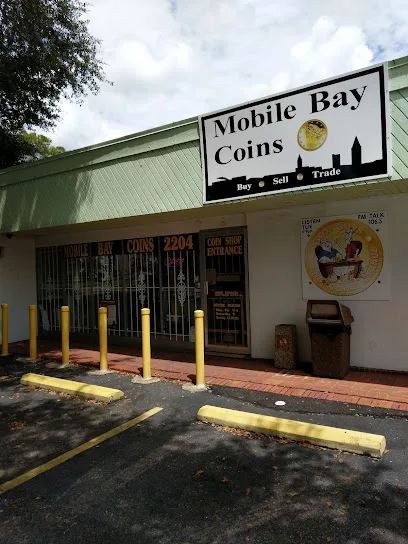
Consignment auction works differently. You place the coin into a sale process, and bidders determine the result. The coin may reach collectors who are specifically looking for its date, mint mark, variety, or grade, but the result depends on who participates and how they bid. Mobile Bay Coins & Fine Jewelry says it buys and sells collectible coins and bullion; Mobile Bay Coins & Fine Jewelry is one local business page to consult.
That difference matters when you have a reason to prefer certainty or a reason to test a wider audience. A direct offer gives you a concrete amount to assess now. Auction is a sale process, not a promise that competition will appear.
Match the coin to the likely buyer pool
Think about how many plausible buyers might recognize and want the specific coin. A familiar, widely traded issue may have an established market in which a direct offer is practical to evaluate. A scarce variety, unusual date, or high-grade example may interest a narrower group of collectors; broader auction exposure could be useful if those buyers are likely to notice the lot and bid.
Use completed sales of genuinely comparable coins to test that possibility. Match the denomination and issuing series first, then compare date, mint mark or variety, and condition. A price someone is asking is not the same as a completed sale: an unsold listing may simply reflect a seller’s hoped-for amount. Even completed results need context because differences in grade, certification, eye appeal, and sale venue can affect what buyers paid.
For example, imagine two coins of the same type: one is a common date in ordinary circulated condition, while the other is a scarce variety in a condition collectors actively seek. The first may have a readily understood market and a direct offer that is easy to compare. The second may warrant checking whether comparable auction lots actually attracted bidders, rather than assuming rarity by itself creates competition.
Compare likely proceeds, not headline prices
Put the dealer’s offer beside an estimate of what you would receive from an auction, after the costs assigned to the seller. Depending on the auction’s terms, those costs may include a seller’s commission and charges related to the lot, insurance, shipping, or other services. Use the written fee schedule rather than assuming that the quoted hammer price—the winning bid before fees—is the amount paid to you.
A simple comparison is:
| Route | What to compare | Useful when |
|---|---|---|
| Dealer purchase | The stated amount and transaction timing | You want a defined offer |
| Consignment auction | Likely result after auction fees, plus the wait | Comparable demand may bring competing bids |
An auction estimate is a guide, not a guaranteed selling price. If comparable lots have a wide range of outcomes, treat that spread as meaningful uncertainty rather than choosing the highest result as your expected payout. Compare a realistic estimate of what you would receive with the actual dealer offer; the larger headline number is not necessarily the better result.
Read the terms before committing the coins
Before consigning, find out whether there is a reserve or minimum price, what happens if the coin does not sell, who pays for shipping and insurance, and when payment is due after a successful sale. These details affect both your control over the coin and the time before you receive proceeds. The written agreement should make the unsold-coin process understandable, including whether the coin is returned or offered again.
For a direct purchase, make sure the agreed amount covers the exact coins you intend to sell and that the payment and ownership transfer are clear before you complete the transaction. If several coins are presented together, distinguish any individual offer from a single total for the group so you know what amount applies to each item.
Your decision can follow the evidence: choose the defined offer when the amount after costs and timing suit your purpose; consider auction when comparable completed sales suggest a real audience and the written costs leave a worthwhile possibility. That is a comparison of two different sale mechanisms—not a contest between a guaranteed dealer price and an imagined best-case bid.
Other guides worth a read
Is Third-Party Coin Grading Worth the Cost Before a Sale?
Learn when professional coin certification may help a sale, how to count the full submission cost, and how to compare relevant completed sales.
How to Compare Bullion Bars and Coins Before Buying
Compare bullion by fine-metal content, total transaction cost, product type, and resale flexibility—not by item count or headline price alone.
How to Evaluate a Coin Collection Before Accepting an Offer
Learn how to sort a large or inherited coin collection, distinguish identification from valuation, interpret a dealer’s purchase offer, and compare b…
Editorial note. Honduras Collectibles is an independent directory and does not buy or sell coins, broker transactions, certify dealers, or promise quotes. Prices and percentages quoted reflect industry-typical ranges and are indicative only; spot price is a reference point, not a dealer offer. We do not provide professional valuation or investment advice.