Dealer or Auction? Choosing How to Sell Your Coins
A direct dealer sale is often the better fit when you want a simpler transaction and a defined offer; an auction may make sense when a coin could draw competing collector bids and you can accept uncertain timing and proceeds. The useful comparison is not a dealer’s offer against an auction’s highest imaginable hammer price. It is the amount you are likely to keep from the same coins, after costs, alongside the time and uncertainty each route involves.
What a direct dealer sale offers
A dealer buys coins with the intention of reselling them. The offer is therefore a purchase price, not the same thing as a shop’s retail asking price for a comparable coin. The dealer takes on the work of finding a later buyer, holding the piece, and bearing the possibility that it sells slowly or for less than expected. That resale role helps explain why a cash offer can be below a retail listing without automatically making it unfair.
A direct sale can be attractive if you value a clear transaction over waiting for a particular buyer. It can also be practical for common or readily traded material, where an auction process may add effort without a strong reason to expect specialized bidding. Ask what coins are included in the offer and whether the amount applies to the whole group or to individual pieces; that distinction makes it easier to compare a mixed collection fairly.
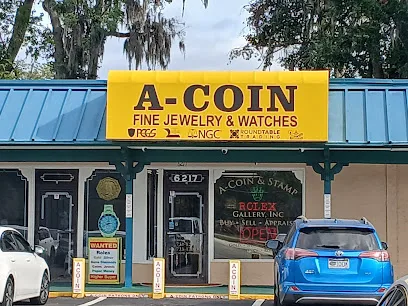
A-Coin & Stamp Gallery in Jacksonville says it is looking for coins and welcomes walk-ins; A-Coin & Stamp Gallery, Inc. is one local option to contact about its current buying process.
What changes when you sell at auction
At auction, the final price is shaped by the bidders who participate in that sale. A scarce coin with an identifiable collector audience may benefit from competition between interested buyers. But an auction is not a promise of a premium: if few bidders pursue the lot, the result may fall short of the seller’s expectations. The sale date, cataloging, and settlement process also mean proceeds typically are not as immediate as a completed direct purchase.
Read the consignment agreement for the costs and outcomes that affect your net. Seller commissions and other charges can reduce the hammer price, and terms may explain when payment is made, what happens if a lot does not sell, and whether withdrawal or return is possible. These details vary by auction and contract, so use the actual terms rather than a general fee assumption when estimating proceeds.
Auctions can also group coins differently. A sale may present one coin individually or combine several into a lot. A grouped lot can suit material with related appeal, while an individually described coin may be easier for collectors to evaluate on its own. The format and audience matter: a strong result depends on relevant bidders seeing and wanting the item, not simply on choosing an auction venue.
Match the route to the coins and your priorities
Think about the likely buyer pool for the particular coins, not only the collection as a whole. Common circulated pieces or broadly traded bullion may have a relatively straightforward market. A specialized date, variety, or condition-sensitive numismatic coin may attract a narrower group of collectors, making an auction worth considering if it reaches those buyers. That possibility is most useful when the coin’s identity and appeal can be clearly described.
Your own constraints count too. If a predictable, direct transaction matters more than waiting for a potentially higher result, a dealer route may fit better. If you can wait through the sale cycle and live with a result that is uncertain until bidding ends, auction consignment may be reasonable. For a collection containing both routine material and a few specialized pieces, you do not have to treat every coin identically: compare routes for the standout pieces separately from the rest.
Compare expected proceeds, not headline prices
Start with the same inventory for every comparison. Record each coin’s date, denomination, mint mark where applicable, and any existing grade or attribution, then note which items each offer or consignment proposal covers. A total for different groups of coins is not a meaningful head-to-head comparison.
Use the terms and estimates available to compare the routes on matching criteria:
| Factor | Direct dealer sale | Auction consignment |
|---|---|---|
| Price basis | Offer to purchase the listed coins | Bid result, less seller charges |
| Timing | Set by the direct transaction | Depends on sale and payout schedule |
| Main uncertainty | Whether the offer suits your goals | Bidder interest and whether a lot sells |
For an auction estimate, subtract the stated commission and other seller costs from a realistic expected result, rather than treating the hammer price as money in hand. Then compare that net figure with the dealer’s offer for precisely the same coins. If the auction’s possible advantage is small after charges, a simpler direct sale may be more compelling; if a specialized coin has a plausible audience and the net difference is meaningful to you, the added wait may be worthwhile.
The decision turns on the trade you prefer: a dealer’s defined purchase price and a more direct process, or an auction’s exposure to bidding with less certainty about the final proceeds. Compare those alternatives coin by coin when the collection is mixed, and use the written offer and consignment terms as the basis for your calculation.
Other guides worth a read
How Should You Store Coins to Prevent Avoidable Damage?
Protect a coin’s surfaces by handling it carefully, choosing a suitable holder, controlling its storage environment, and keeping pieces separate and…
Does a D Mint Mark Mean a Dahlonega Coin?
A D can point to either Dahlonega or Denver. Use the coin’s date, denomination, and design together to make a sound first attribution.
What a Coin Grade Tells You—and What It Leaves Out
A coin grade summarizes physical condition, but it does not identify every feature or establish a price. Learn how to read the number and compare coi…
Editorial note. Honduras Collectibles is an independent directory and does not buy or sell coins, broker transactions, certify dealers, or promise quotes. Prices and percentages quoted reflect industry-typical ranges and are indicative only; spot price is a reference point, not a dealer offer. We do not provide professional valuation or investment advice.